Uitgelicht

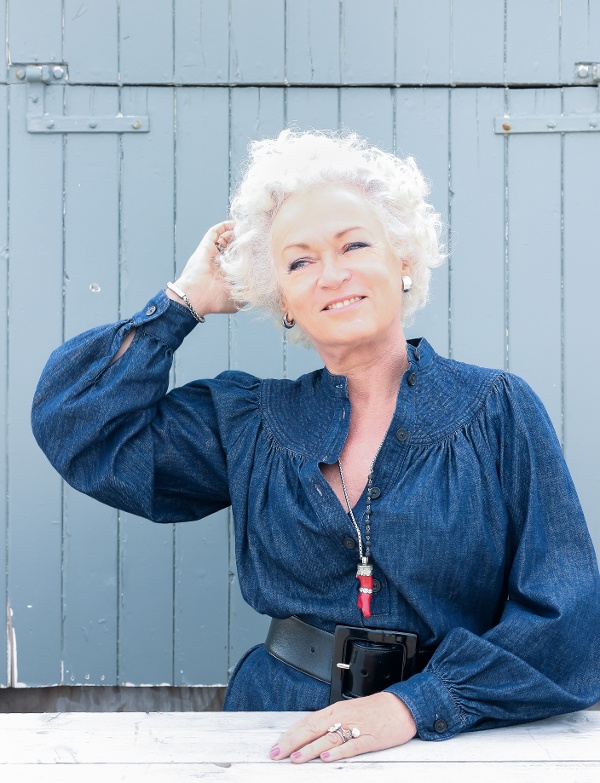
Wie is Liesbeth van Duijn?

Waarom doen mensen wat ze doen?

Het blijft me verbazen hoe mensen hun keuzes maken. Waarom houden we vast aan overtuigingen die ons niet verder helpen? Waarom doen we dingen waarvan we eigenlijk weten dat ze niet verstandig zijn? En waarom is het soms zo moeilijk om van mening te veranderen, zelfs wanneer de feiten daar alle aanleiding toe geven?

Ik ben minstens zo geïnteresseerd in de antwoorden als in de vragen. En ik sluit niet uit dat ik zelf ook regelmatig onderwerp van onderzoek zou kunnen zijn.

Een leven naar eigen inzicht

Een paar jaar geleden besloot ik in Noord-Portugal een huis te laten bouwen. Niet omdat ik droomde van een romantisch bestaan tussen de olijfbomen, maar omdat ik hier een aantal dingen kon realiseren die ik belangrijk vind.

Een mooi huis, ruimte om me heen en de mogelijkheid om betaalbaar mensen in te huren voor het huishouden en de tuin. Dat geeft me tijd voor de dingen die ik liever zelf doe.

Of Portugal me in alle opzichten bevalt? Zeker niet. Maar dat hoeft ook niet. Iedere keuze heeft voor- en nadelen. De kunst is volgens mij om te bepalen welke je belangrijk vindt en welke je bereid bent te accepteren.

Ik ben graag thuis, samen met mijn poes. Ik hoef niet voortdurend op reis of op zoek naar nieuwe bestemmingen. Er valt thuis en in mijn hoofd al genoeg te ontdekken.

Mijn hoofd staat zelden stil

Ik studeer momenteel epifysiologie bij Evenwijs, waar onder andere immunologie en natuurgeneeskunde aan bod komen.

Niet omdat ik nog een diploma nodig heb, maar omdat ik wil begrijpen hoe dingen werken.

Hoe beïnvloeden voeding, hormonen, het immuunsysteem en onze leefomgeving elkaar? Welke rol spelen stress, emoties en overtuigingen bij ons gedrag? En waarom reageert de ene persoon zo anders dan de andere?

Mijn achtergrond als diëtist, orthomoleculair therapeut en oprichter van Nederland Slank sluit daar natuurlijk op aan. Ik heb een groot deel van mijn werkzame leven besteed aan de relatie tussen voeding en gezondheid.

Maar kennis is voor mij geen verzameling waarheden die je eenmaal leert en vervolgens nooit meer ter discussie stelt. Juist wanneer iets algemeen geaccepteerd is, vind ik het interessant om te weten waarop die zekerheid gebaseerd is.

Dat betekent overigens niet dat iedere afwijkende theorie automatisch deugt. Ook daarvoor wil ik graag bewijs zien.

Mensen zijn minstens zo ingewikkeld als hun stofwisseling

Misschien vind ik menselijk gedrag uiteindelijk nog wel fascinerender dan het menselijk lichaam.

De verwachtingen die mensen van elkaar hebben. De manier waarop ze relaties aangaan. De behoefte aan erkenning, zekerheid of controle. En de merkwaardige tegenstelling tussen wat we zeggen belangrijk te vinden en wat we vervolgens daadwerkelijk doen.

Daar kun je eindeloos over nadenken.

Ik houd van goede gesprekken, humor, gastronomie en mensen die iets interessants te vertellen hebben. Een meningsverschil hoeft daarbij geen probleem te zijn. Integendeel, zolang we bereid zijn naar elkaars argumenten te luisteren.

En soms is het ook gewoon prettig om samen te lachen om de absurditeit van het dagelijks leven.

Waarover ik schrijf

Deze website heeft geen vast thema. Dat zou me waarschijnlijk al snel gaan vervelen.

Je vindt hier mijn ervaringen in Portugal, gedachten over gezondheid en wetenschap, observaties over relaties en menselijk gedrag, en onderwerpen die toevallig mijn belangstelling trekken.

Soms schrijf ik vanuit mijn professionele kennis, soms vanuit persoonlijke ervaring en soms omdat ik iets lees of meemaak waarvan ik denk: hoe zit dat eigenlijk?

Ik heb niet de ambitie om iedereen te overtuigen. Wel om argumenten te geven voor wat ik denk en open te blijven staan voor betere.

Want een mening hebben is niet zo moeilijk. Een mening kunnen onderbouwen, en zo nodig herzien, is een stuk interessanter.

Veel plezier met lezen.

Liesbeth
Who is Liesbeth van Duijn? (Liz da Duna)

Why do people do the things they do?

I never cease to be fascinated by the choices people make. Why do we cling to beliefs that no longer serve us? Why do we keep doing things we know aren’t particularly good for us? And why is changing our minds sometimes so difficult, even when the evidence gives us every reason to?

I’m just as interested in the answers as I am in the questions. And I certainly wouldn’t rule out examining a few of my own decisions along the way.

A life on my own terms

A few years ago, I decided to have a house built in northern Portugal. Not because I was dreaming of some romantic Mediterranean lifestyle, but because it offered me the opportunity to arrange my life around what matters to me.

A beautiful home, plenty of space, and the possibility of hiring affordable help with the garden and household chores. That leaves me more time for the things I’d actually rather be doing.

Do I love everything about Portugal? Certainly not. But I don’t have to. Every choice comes with advantages and disadvantages. The trick, I believe, is knowing what matters most to you and which compromises you’re willing to make.

I’m quite happy at home, especially with my cat around. I don’t need to be constantly travelling or searching for the next destination. There’s already more than enough to explore, both around me and inside my own head.

My mind rarely takes a day off

I’m currently studying epiphysiology at Evenwijs, exploring subjects including immunology and naturopathic medicine.

Not because I particularly need another qualification, but because I genuinely enjoy understanding how things work.

How do nutrition, hormones, the immune system and our environment influence one another? What role do stress, emotions and beliefs play in our behaviour? And why do two people respond so differently to seemingly identical circumstances?

My professional background naturally feeds into these interests. I’m a dietitian, an orthomolecular therapist and the founder of Nederland Slank, a Dutch company specialising in personalised nutrition and weight management.

I’ve spent much of my professional life investigating the relationship between food, metabolism and health.

But I don’t regard knowledge as a collection of established truths that should never be questioned. In fact, when something is widely accepted, I’m particularly interested in discovering what the evidence actually tells us.

That doesn’t mean every unconventional theory deserves to be believed, either. Evidence matters on both sides.

People are at least as complicated as their metabolism

I sometimes think human behaviour fascinates me even more than the human body itself.

The expectations we place on one another. The way we form relationships. Our need for recognition, security or control. And the remarkable gap between what people claim to value and what they actually do.

There’s enough material there to keep me thinking indefinitely.

I enjoy stimulating conversations, humour, good food and interesting company. I don’t mind disagreement. Quite the opposite, provided we’re willing to listen to each other’s arguments.

And sometimes it’s simply enjoyable to laugh together at the absurdities of everyday life.

What I write about

This website doesn’t have one particular theme. I’d probably find that rather restrictive.

Here you’ll find stories about my experiences in Portugal, thoughts on health and science, observations about relationships and human behaviour, and whatever else happens to capture my attention.

Sometimes I write from professional knowledge, sometimes from personal experience, and sometimes because I’ve read or encountered something that makes me wonder: What’s really going on here?

I’m not particularly interested in getting everyone to agree with me. I’d rather explain why I think what I think, and remain open to a better argument.

After all, having an opinion is easy. Being able to support it — and change it when necessary — is far more interesting.

Enjoy reading.

Liesbeth

A Michelin Star on Your Plate. But Who Do You Share the Evening With?

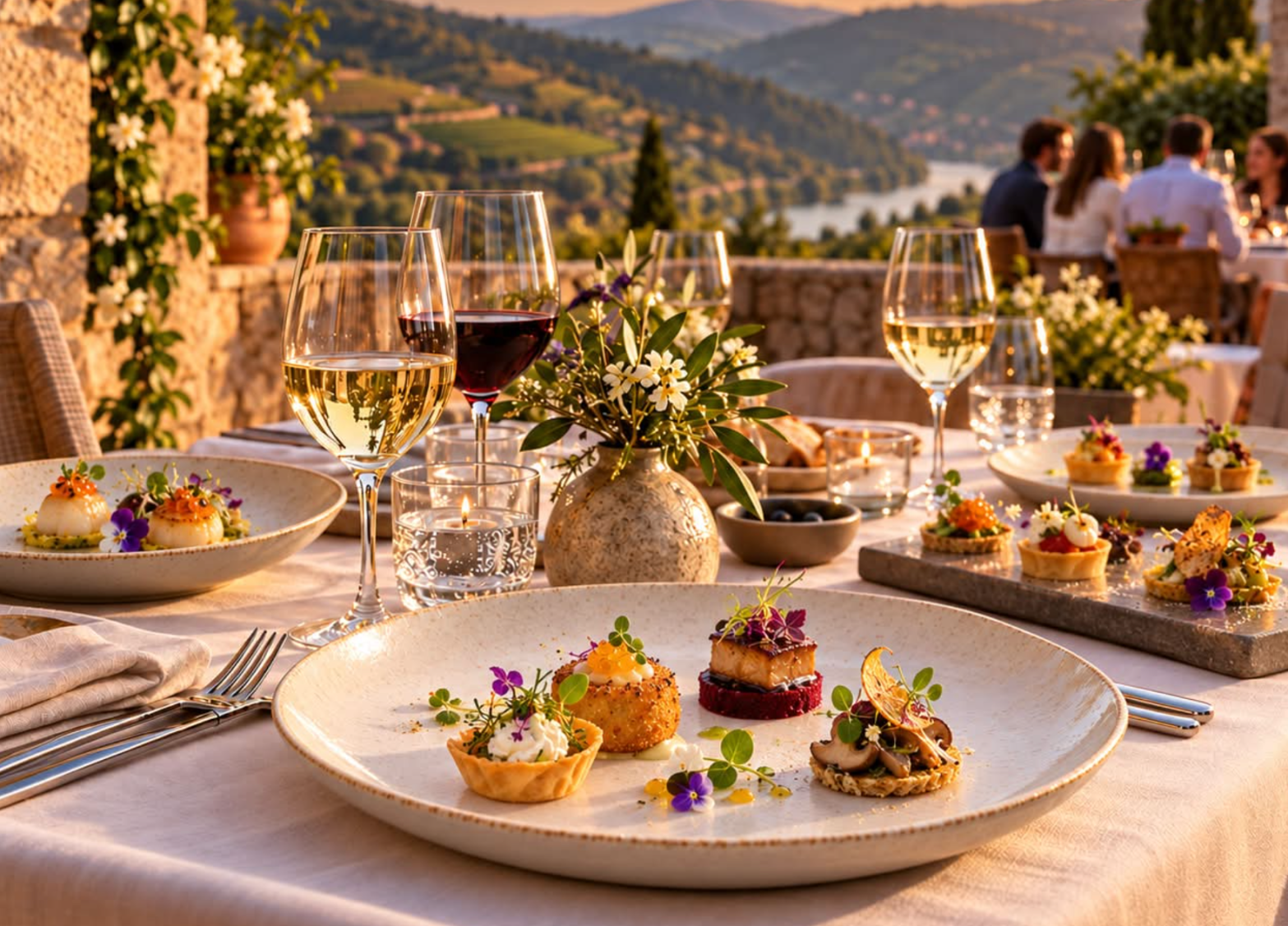
I love good food. And I don’t mean just any good food. I mean restaurants where someone has genuinely thought about every detail of what’s on your plate. Where flavours complement each other, the presentation is almost a work of art, and you leave thinking: that wasn’t just a meal, that was an experience.

Now, that’s not necessarily what the average Portuguese person dreams about. Many seem perfectly happy with a generous serving of bacalhau. Nothing wrong with that, of course, but I happen to get excited about a little more culinary adventure.

I’ve visited A Cozinha by chef António Loureiro in Guimarães, a Michelin-starred restaurant, several times now. And every visit has been a pleasure.

But here’s the thing.

It’s so much more enjoyable with good company.

That could be female friends who appreciate what’s on their plates and in their glasses. Or, naturally, a tall, dark and handsome gentleman who can hold an interesting conversation and knows a thing or two about wine.

So far, my luck with Portuguese men in that department has been rather limited. They seem more interested in salt cod than an exquisite tasting menu.

But perhaps I simply haven’t met the right one yet.

And then there’s Gilbert.

Gilbert runs Chez Gilbert in Vilar Seco, near Viseu. He’s still waiting for me to finally pay him a visit.

I really do want to come, Gilbert!

But driving all that way on my own for a wonderful meal… Wouldn’t it be so much nicer to have someone to share the anticipation, the journey and the experience with?

My Social Dining Club: Two Enthusiasts and Eight Empty Chairs

Some time ago, I came up with the idea of starting a Social Dining Club.

Nothing complicated. Just a group of people who enjoy discovering exceptional restaurants together.

Michelin-starred restaurants are my personal favourites, but a surprisingly good restaurant without a star can be just as interesting.

I thought: surely there must be plenty of Dutch and Belgian people living in Portugal who appreciate the finer things in life? People who enjoy good food but would also like to meet interesting new people?

So I put the idea out there.

The result?

Two responses.

One from a holistic veterinarian from the Netherlands and another from a former professional footballer.

Both lovely examples of people who enjoy good food and meeting new people. Exactly what I had in mind!

But two enthusiasts don’t quite fill a dinner table.

Naturally, we wondered whether the price might be putting people off.

So we even tried a Bib Gourmand restaurant. That’s another Michelin distinction, awarded to restaurants offering excellent food at more affordable prices.

You see, we’re perfectly willing to compromise on the budget.

Just not on the company.

Unfortunately, even that didn’t produce the flood of enthusiastic responses I’d hoped for.

I was beginning to wonder whether I might be the only Dutch person in Portugal who gets excited about a beautifully presented dish rather than a large plate of potatoes and bacalhau.

Because what I’d really love is a table of around ten people.

Enough for lively conversations, interesting encounters, new friendships and perhaps even a little romance.

You never know.

Maybe the word club is the problem.

Perhaps people imagine we’ll have to elect a chairman, collect membership fees and organise an annual general meeting.

Good heavens, no!

I just want to book a table.

Great Food, Wonderful Wine and Conversations Worth Having

As far as I’m concerned, nobody needs to be a culinary expert.

You don’t need to know which grape grows on which hillside or be able to explain precisely why a particular sauce is so extraordinary.

But a little curiosity about flavours, beautiful dishes and good wine certainly helps.

And just as importantly, I enjoy people with humour, life experience, opinions of their own and a genuine interest in others.

I love talking about nutrition — it’s my profession, after all.

But over dinner, I’m equally happy discussing travel, entrepreneurship, Portugal, relationships, what’s happening in the world or simply the absurdities of everyday life.

An exceptional meal can easily last three hours.

And if the company is good, I certainly wouldn’t mind staying longer.

So, Who’s Joining the Table?

Perhaps we should simply start with a lovely lunch or dinner together.

At A Cozinha in Guimarães, at Gilbert’s restaurant in Vilar Seco, or somewhere else where an enthusiastic chef creates something extraordinary.

And if the budget is an issue, we can always choose another Bib Gourmand restaurant.

We’ve already demonstrated that we’re flexible!

Everyone pays for their own meal. No obligations, no membership fees and no complicated organisation.

Just ten interesting people around one table.

Men, women, couples and singles are all welcome. All you need is an appreciation for good food, good company and the pleasure of meeting new people.

And if a charming single gentleman happens to join us, someone who enjoys great food, a beautiful glass of wine and a little adventure, well…

You certainly won’t hear me complaining.

So, who’s brave enough to pull up a chair?

Leave a comment below or send me a private message.

Perhaps before long, we’ll find ourselves sitting around a beautiful table with ten wonderful people, enjoying an unforgettable meal.

And no, you don’t need to have a Michelin star yourself.

A little sparkle in your eyes will do just fine. 😉

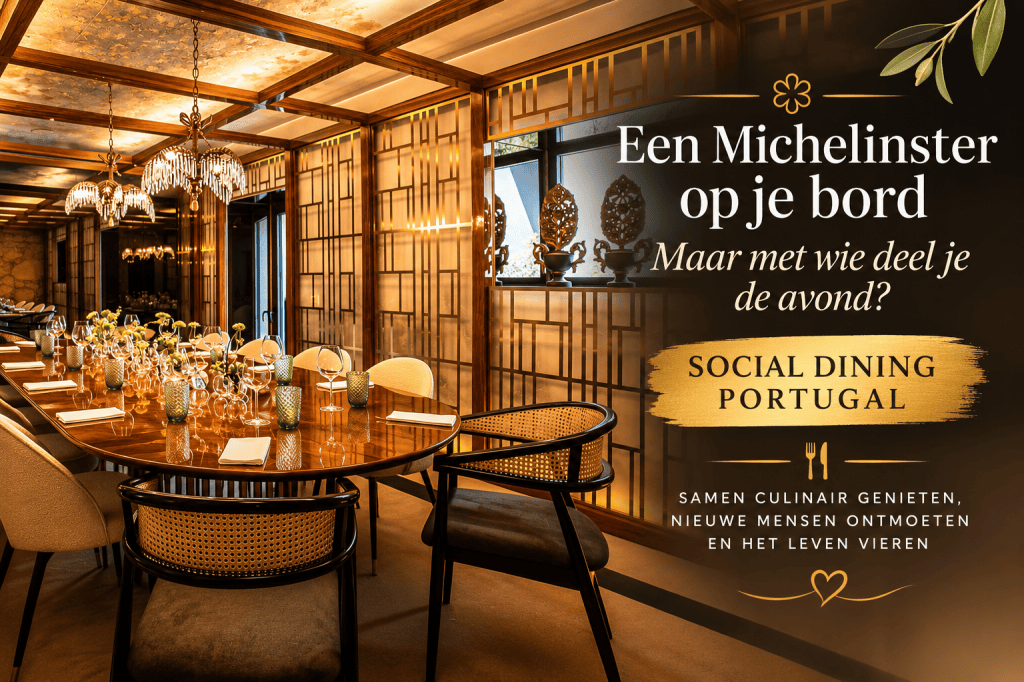
Een Michelinster op je bord. Maar met wie deel je de avond?

Ik hou van lekker eten. En dan bedoel ik niet zomaar lekker eten, maar restaurants waar iemand écht heeft nagedacht over wat er op je bord ligt. Waar smaken elkaar versterken, de presentatie bijna een kunstwerk is en je na afloop denkt: dit was niet zomaar een maaltijd, dit was een belevenis.

Dat is trouwens niet helemaal waar de gemiddelde Portugees van droomt. Die lijkt toch vaak gelukkiger te worden van een flinke portie bacalhau. Niets mis mee, maar ik word nu eenmaal enthousiast van iets meer culinair avontuur.

Bij A Cozinha van chef António Loureiro in Guimarães, bekroond met een Michelinster, ben ik inmiddels een paar keer geweest. En iedere keer is het weer genieten.

Maar weet je wat? Het is stukken leuker met goed gezelschap.

Dat kunnen vriendinnen zijn die begrijpen wat er op hun bord ligt en in hun glas zit. Of natuurlijk een tall, dark and handsome die behalve een goed gesprek ook een beetje verstand heeft van wijn.

Met de Portugese mannen wil het op dat gebied tot nu toe niet erg lukken. Die lijken toch meer belangstelling te hebben voor stokvis dan voor een verfijnd degustatiemenu. Maar misschien heb ik gewoon nog niet de juiste ontmoet.

En dan is er Gilbert.

Gilbert heeft in Vilar Seco, bij Viseu, zijn restaurant Chez Gilbert. Hij wacht nog steeds tot ik eindelijk eens langskom.

Ik wil graag, Gilbert! Maar om nu in mijn eentje zo’n eind te rijden voor een heerlijke maaltijd… Het is toch veel gezelliger als je onderweg al kunt uitkijken naar een mooie middag of avond samen?

Mijn Social Dining Club: twee liefhebbers en nog acht lege stoelen

Een tijdje geleden bedacht ik daarom een Social Dining Club. Geen ingewikkelde vereniging, maar gewoon een groep mensen die het leuk vindt om af en toe samen een bijzonder restaurant te ontdekken.

Michelinrestaurants hebben mijn voorkeur, maar een verrassend goed restaurant zonder ster kan natuurlijk net zo interessant zijn.

Ik dacht: in Portugal wonen toch genoeg Nederlanders en Belgen die van het goede leven houden? Mensen die niet alleen ergens willen eten, maar ook nieuwe mensen willen ontmoeten?

Dus ik gooide het idee op tafel.

Het resultaat?

Twee reacties.

Eentje van een holistische dierenarts uit Nederland en eentje van een voormalig profvoetballer.

Allebei mensen die graag lekker eten en nieuwe mensen willen leren kennen. Precies de bedoeling dus!

Maar daarmee hebben we nog geen gezellige tafel vol.

En natuurlijk dachten we ook: misschien ligt het aan de prijs.

Dus hebben we zelfs een keer gekozen voor een Bib Gourmand-restaurant. Ook een onderscheiding van Michelin, maar dan voor restaurants waar je bijzonder goed kunt eten voor een vriendelijkere prijs.

Kijk, we zijn best bereid om concessies te doen aan het budget. Niet aan de gezelligheid natuurlijk.

Maar ook daarmee ontstond nog niet de stormloop waarop ik had gehoopt.

Ik begon me bijna af te vragen of ik de enige Nederlander in Portugal ben die enthousiast wordt van een mooi opgemaakt bord in plaats van een schaal vol aardappelen en bacalhau.

Want het leukste lijkt me juist een gezelschap van een man of tien. Groot genoeg voor verschillende gesprekken, nieuwe ontmoetingen en misschien wel verrassende vriendschappen. Of iets meer, je weet maar nooit.

Misschien schrikt het woord club een beetje af. Alsof we eerst een voorzitter moeten kiezen, contributie moeten innen en een jaarvergadering moeten organiseren.

Nou, daar heb ik helemaal geen zin in.

Ik wil gewoon een tafel reserveren.

Goed eten, mooie wijn en gesprekken die ergens over gaan

Wat mij betreft hoeft niemand een culinaire expert te zijn. Je hoeft niet te weten welke druif op welke helling groeit of precies te kunnen uitleggen waarom een bepaalde saus zo bijzonder is.

Maar enige nieuwsgierigheid naar smaken, mooie gerechten en goede wijn is natuurlijk wel leuk.

En minstens zo belangrijk: mensen met humor, levenservaring, een eigen mening en belangstelling voor elkaar.

Want ik vind het heerlijk om over voeding te praten, dat is tenslotte mijn vak. Maar aan tafel mag het ook best over reizen, ondernemerschap, Portugal, relaties, de wereld of gewoon de absurditeiten van het dagelijks leven gaan.

Een bijzondere maaltijd duurt soms drie uur. Wat mij betreft mag dat best langer zijn als het gezelschap goed is.

Dus, wie schuift er aan?

Misschien moeten we maar gewoon beginnen met een eerste gezamenlijke lunch of diner.

Bij A Cozinha in Guimarães, bij Gilbert in Vilar Seco of ergens anders waar een enthousiaste chef iets bijzonders op tafel zet.

En als het budget een bezwaar is, kiezen we gewoon weer een Bib Gourmand. We hebben inmiddels bewezen dat we flexibel zijn.

Iedereen betaalt zijn eigen rekening. Geen verplichtingen, geen lidmaatschap en geen ingewikkelde organisatie.

Gewoon tien leuke mensen aan één tafel.

En mocht er toevallig een leuke vrijgezelle man aanschuiven die van goed eten, een mooi glas wijn en een beetje avontuur houdt, dan ga ik natuurlijk niet protesteren.

Dus wie heeft er zin om aan te schuiven?

Laat hieronder een reactie achter of stuur me persoonlijk een berichtje. Misschien zitten we binnenkort met tien mensen aan een prachtige tafel.

En nee, je hoeft zelf geen Michelinster te hebben.

Een beetje sterren in je ogen is ook prima. 😉

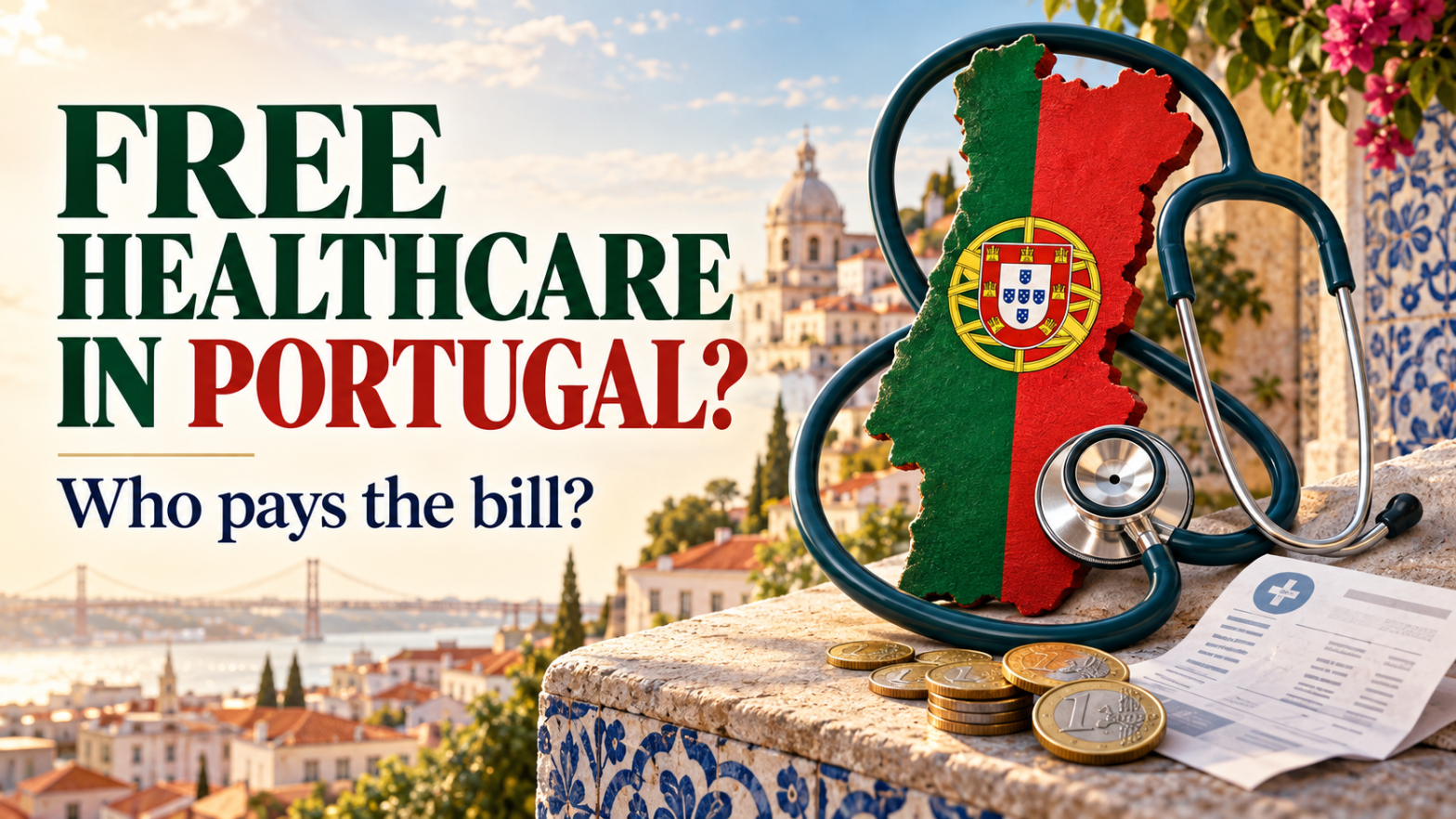
Free healthcare for immigrants in Portugal: who pays the bill?

A friend of mine was quite upset. He believed that immigrants were simply being given free healthcare in Portugal.

I can understand why people who wait a long time for treatment, or help fund healthcare in Portugal, want to know how the costs are shared. I will soon need hospital care here myself, so this has become personal for me too. Who pays for my care? What do I contribute? And how does it work for other immigrants living here?

That is why I looked into the rules. Immigrants do not all have the same entitlements, conditions or financial arrangements.

How Portugal’s public healthcare is funded

Portugal’s national health service, the Serviço Nacional de Saúde (SNS), is mainly funded through the state budget.

A patient may receive treatment without being charged, but that care still has to be paid for. The money generally comes from public funds, rather than the individual health insurance premiums we are familiar with in the Netherlands.

When do patients pay?

Covered SNS consultations, tests and hospital treatment generally have no patient charge. This applies to Portuguese patients and eligible foreign residents alike. Charges remain for certain emergency visits without an SNS referral, unless the patient is exempt or is admitted to hospital.

People legally living in Portugal

Foreign nationals legally living in Portugal can qualify for SNS coverage. For adults, the required registration information includes identification, a NIF, a Portuguese address and valid proof of legal residence. Having a número de utente — an SNS patient number — alone is not enough.

International agreements can also determine which country is financially responsible.

Immigrants who pay Portuguese taxes contribute to public services. However, access to public healthcare is not limited to people who pay a separate monthly health insurance premium.

Dutch residents: when the Netherlands pays

Being Dutch does not automatically determine who pays for your healthcare. Someone living and working in Portugal may fall under the Portuguese system.

An S1 form is used when you live in one European country but another country is responsible for your healthcare. It can apply to workers, pensioners and certain family members.

In my own case, I already used an S1 form to register in Portugal before retiring, when I was insured through my work.

While working

If you live in Portugal but remain subject to the Dutch social security system because of your work, your Dutch health insurer can issue an S1 form. You pay the Dutch health insurance premium, and income-related contributions are handled according to your employment situation. The form allows you to register for public healthcare in Portugal.

Which country’s system applies depends on your working situation. Having a Dutch employer or company alone does not settle this.

With a pension or certain benefits

If you receive a qualifying Dutch statutory pension or benefit and the Netherlands is responsible for your healthcare, the CAK arranges your S1 form. You pay a treaty healthcare contribution to the CAK, often deducted from your pension or benefit. Its amount depends on factors including your income, insured family members and the adjustment used for your country of residence.

In both Dutch routes, Portugal provides care under Portuguese rules, while the Netherlands remains financially responsible under European reimbursement arrangements. Payments between the countries are calculated separately from your individual premium or CAK contribution.

What does Portugal receive?

There are official European reimbursement arrangements. For some groups, payments are based on average healthcare costs in Portugal.

For example, Official Journal publication C/2026/4716, dated 2 September 2026, includes Portugal’s 2023 figures in table II for pensioners and their family members. For the group aged 65 or over, the annual calculation basis is €2,351.04. The column applying a 20% reduction gives €156.74 per month.

That is a calculation for a particular age group and year. It is not an individual treatment budget or a general rate for immigrants’ healthcare in 2026.

American residents: who pays for their care?

An American with a valid Portuguese residence permit and the required SNS registration can also qualify for public healthcare. A visa alone is not enough.

The social security agreement between the United States and Portugal does not cover health insurance or Medicare benefits. It does not provide an equivalent arrangement for reimbursing ordinary SNS care.

Where the SNS is responsible for covering that care, it is funded through Portugal’s public system. An American resident may also contribute through Portuguese taxes; the absence of a payment from their home country does not tell us their total contribution.

What about private health insurance?

A person with private health insurance pays premiums to an insurer. For covered treatment, the insurer pays according to the policy, either directly or by reimbursing the patient. The patient may also have to pay part of the bill.

A private policy can exist alongside SNS coverage. Its premiums go to the insurer, rather than into the SNS as a separate public healthcare contribution.

So, when an American uses a private clinic or hospital, the costs may be met by their insurer and their own payments. It depends on the policy and the treatment.

Financial requirements for a residence visa

Americans applying through the D7 route, for example on the basis of a pension or qualifying passive income, must show that they can support themselves.

The US application checklist requires evidence of resources covering at least twelve months. For one adult, it expresses this as savings equivalent to twelve minimum monthly wages. Using the 2026 mainland reference of €920 per month, that is €11,040 for twelve months. Each additional adult adds 50% of the base amount, and each child under eighteen adds 30%.

These figures use the mainland minimum wage; the Azores and Madeira have higher regional minimum wages.

Applicants must also document their qualifying pension or other passive income and its availability in Portugal through a Portuguese bank account. The checklist requires accommodation for at least twelve months and travel insurance with medical cover.

Those savings remain the applicant’s money. They are a financial requirement for the residence route, not a payment into Portugal’s public healthcare system.

People without a valid residence permit

People without a valid residence permit can receive care, but costs may fall to the patient or another responsible payer.

A Junta de Freguesia declaration confirming more than ninety days’ residence enables SNS-funded urgent and life-saving care. It must be presented at each visit.

Even without that declaration, separate protections cover maternal and reproductive care, children’s healthcare and national-programme vaccinations. They also apply in family reunification where a household member’s social security contributions are documented, and in cases of social exclusion or financial hardship certified by Segurança Social. Access follows the relevant rules for the general population.

Asylum seekers and refugees

Asylum seekers and refugees, their spouses or equivalent partners, and direct descendants are exempt from SNS patient charges (taxas moderadoras). Valid proof of an asylum application or provisional residence permit must be presented when using health services to establish the exemption.

The exemption also covers emergency visits without an SNS referral, where other patients may still face a charge.

Are the arrangements fair?

Receiving covered SNS treatment without a charge at the point of care is part of the system for Portuguese patients and eligible immigrants alike.

My friend’s concern raises an important question: can Portugal adequately fund and organise healthcare for its residents?

Access to the same public services can come with different financial obligations. It is reasonable to ask how those differences work.

A growing population needs sufficient healthcare capacity. Immigrants can also contribute as employees, business owners, taxpayers and healthcare professionals. To assess the balance, we need evidence about both costs and contributions. Nationality alone cannot give us the answer.

I would welcome more transparency. How much does Portugal receive from foreign healthcare systems? What costs does that cover? And does healthcare capacity reflect the number of residents, their ages and their needs?

I live here as an immigrant myself. Especially with hospital care coming up, I want to understand how the arrangements work and what I contribute. Good healthcare needs solidarity and sustainable funding. Anyone concerned about how the costs are shared deserves an answer that takes the whole picture into account.


Rules and sources checked on 13 October 2026.

Sources

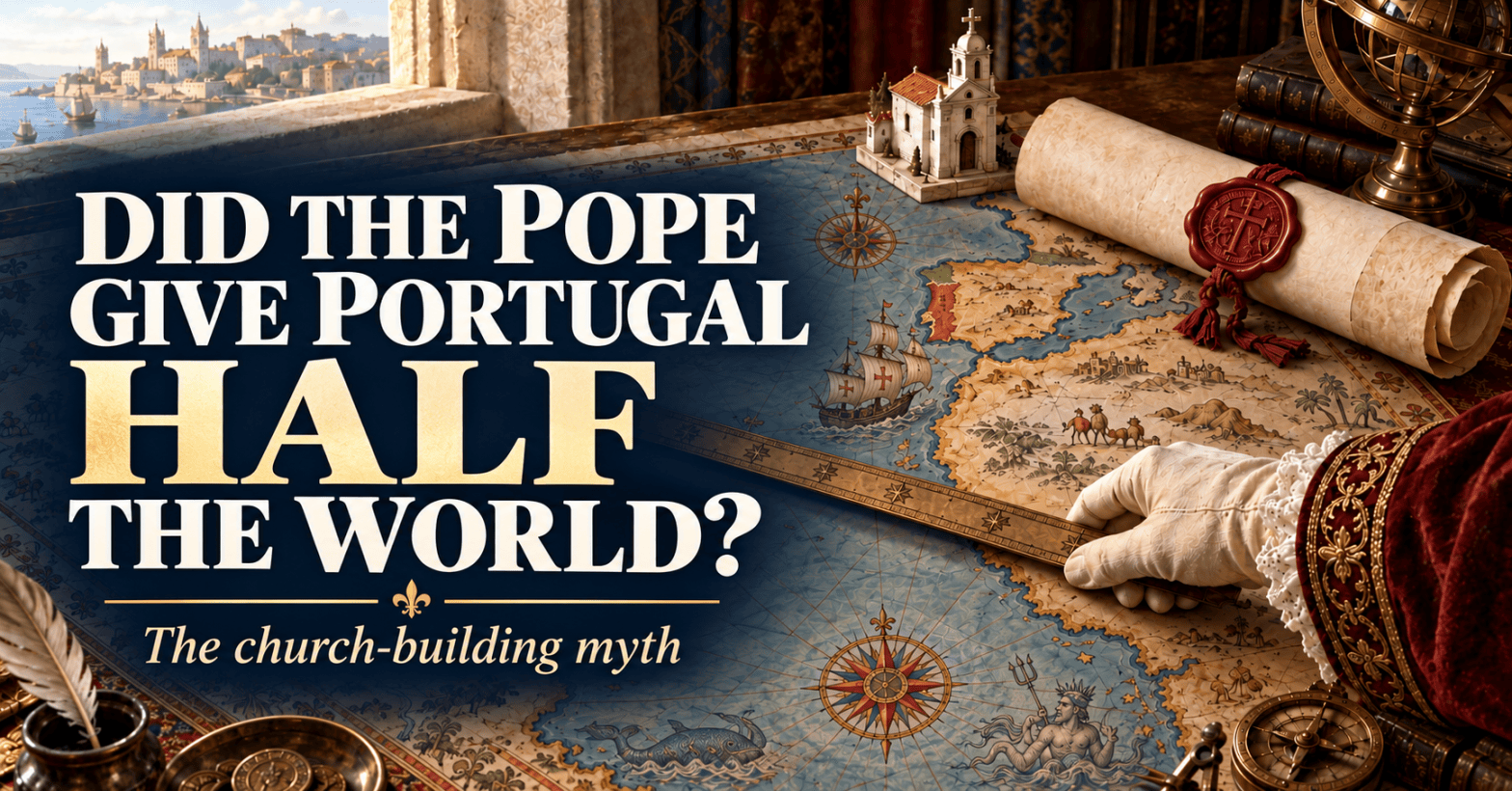
How Many Churches Does It Take to Get Half the World?

Rob (He’s is an exceptionally well-read and knowledgeable man) told me the pope once promised Portugal half the world, provided the Portuguese built enough churches.

Half the world? In exchange for churches?

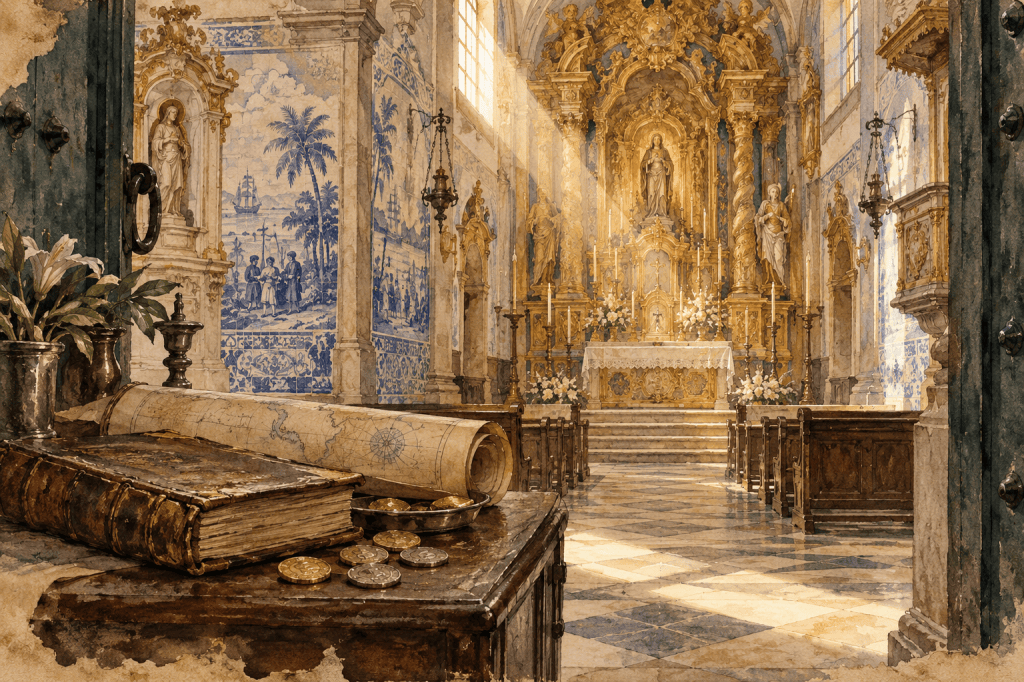
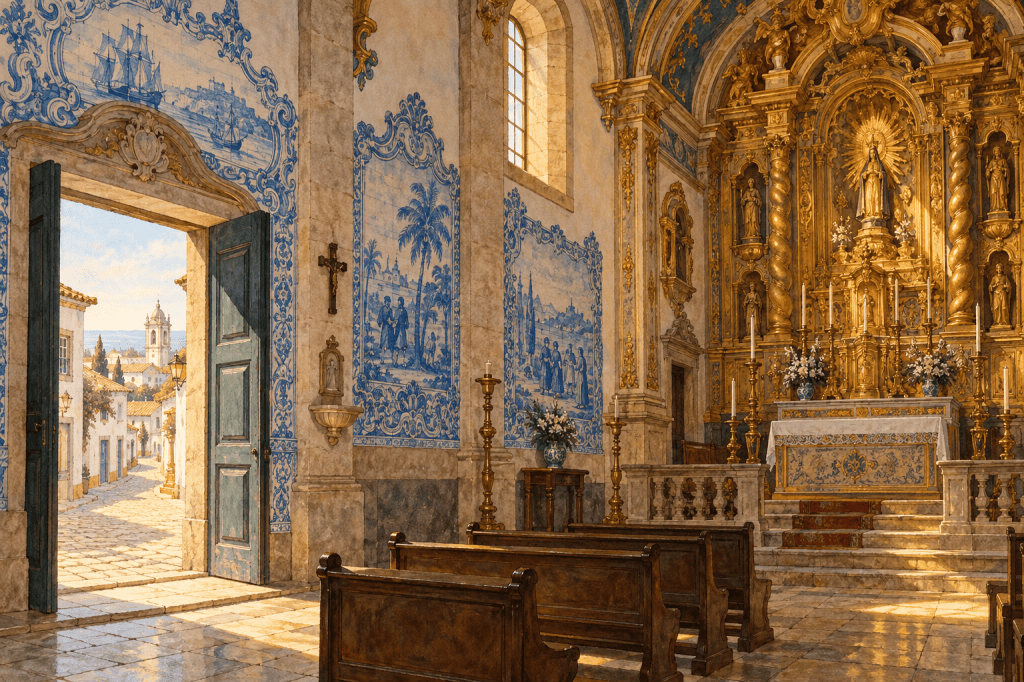
Living in Portugal, I have to admit they seem to have taken the building part seriously. Even a village without a bakery usually has a church. Sometimes two, just in case the first one is busy. But I wanted to know whether a pope had ever sat down with a map and a church-building target.

The answer is more interesting than the story.

The pope did have a say

In the fifteenth century, Portuguese ships were sailing farther and farther down the African coast. Their crews were looking for trade routes and wealth. The king was keen to make sure nobody else got there first. A papal blessing was useful.

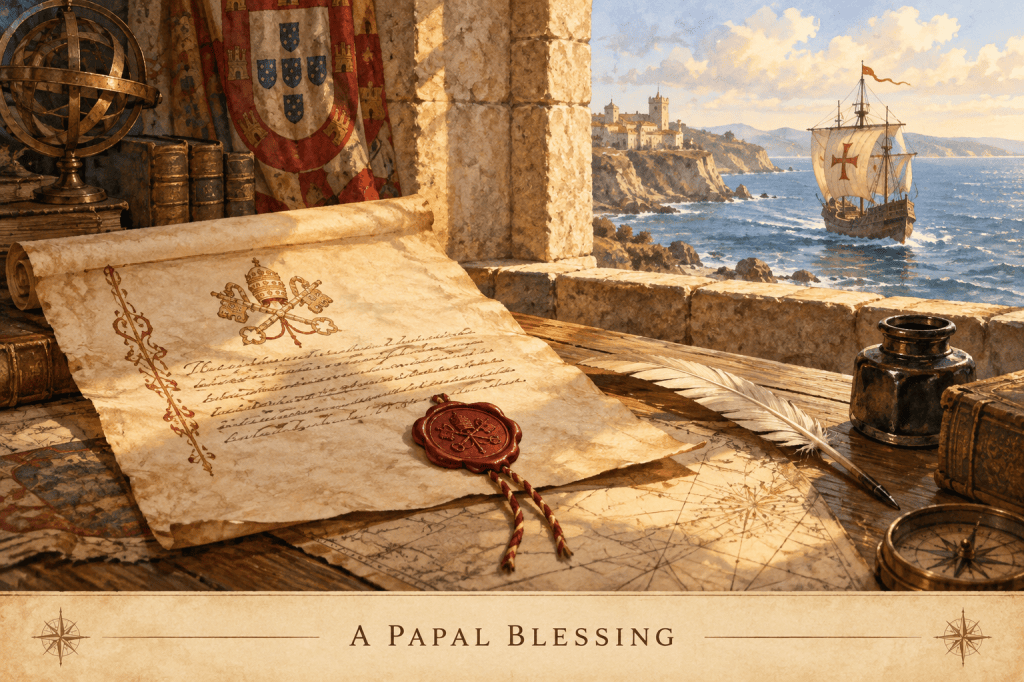
In 1455, Pope Nicholas V issued a document called Romanus Pontifex. It backed Portuguese claims along the African coast and granted extensive trading privileges. Spreading Christianity was presented as part of the enterprise.

Churches appeared in the document too. The Portuguese king was allowed to found churches and monasteries in territories under his control and to send clergy there. Allowed is the important word. The text sets no target of churches to be built before Portugal could claim a particular piece of land. There was no price list: ten chapels for an island, fifty for a coastline.

Religion sailed aboard those ships alongside trade, politics and weapons. The consequences were brutal. Papal support also helped justify the conquest and enslavement of non-Christian people. That part of the story is easy to lose behind an attractive façade covered in azulejos.

A line through the ocean

So where does “half the world” come from? For that, we need to jump forward almost forty years.

After Columbus’s voyage, Portugal and the Spanish rulers disputed their claims across the Atlantic. Pope Alexander VI had a hand in the first proposed boundary. But the division we remember was negotiated by the two kingdoms themselves in the Treaty of Tordesillas, signed in 1494.

They drew an imaginary line from north to south, 370 leagues west of the Cape Verde islands. A league was an old measure of distance. Claims on one side went to Castile; claims on the other went to Portugal. Imagine taking a ruler to a map and saying, “This bit is mine.”

The people already living on those lands were, of course, not invited to the table.

The line put the eastern part of present-day Brazil in the Portuguese sphere. It helps explain why Portuguese became the language of Brazil while Spanish became dominant across much of the surrounding region. That is the very short version. Brazil’s history was far messier than a straight line on a map.

And all those churches?

The Portuguese Crown later played a major role in organizing the Catholic Church overseas. Monarchs supported priests and missions and financed church building. This arrangement became known as the Padroado Português, or Portuguese royal patronage.

Now we have all the ingredients of Rob’s story: papal privileges, a kingdom spreading the faith, churches being built, and a later treaty dividing vast overseas territories between Portugal and Spain. Leave those ingredients to simmer for five centuries and out comes: “The pope gave Portugal half the world in return for enough churches.”

It is a terrific dinner-table story. As history, it goes a little too far.

The churches you see across Portugal today were not all built as part of one papal bargain either. Over many centuries, kings, religious orders, local brotherhoods and wealthy families paid for them. Wealth connected to colonial trade also found its way into the decoration of religious buildings.

Since Rob told me his version, I look at a Portuguese church differently. First I see the stonework, the tiles and the gilded altar. Then I think of that extraordinary time when two monarchies drew a line through an ocean and a pope believed he had a say in what lay beyond it.

I have stopped counting the churches, though. Nobody has found a receipt stating how many were needed for half the world.


Sources

Waar laat je 150.000 liter water?

Ik ben vrij goed in dingen kwijtraken. Mijn sleutels. Mijn telefoon terwijl ik ermee aan het bellen ben. Af en toe een zonnebril.

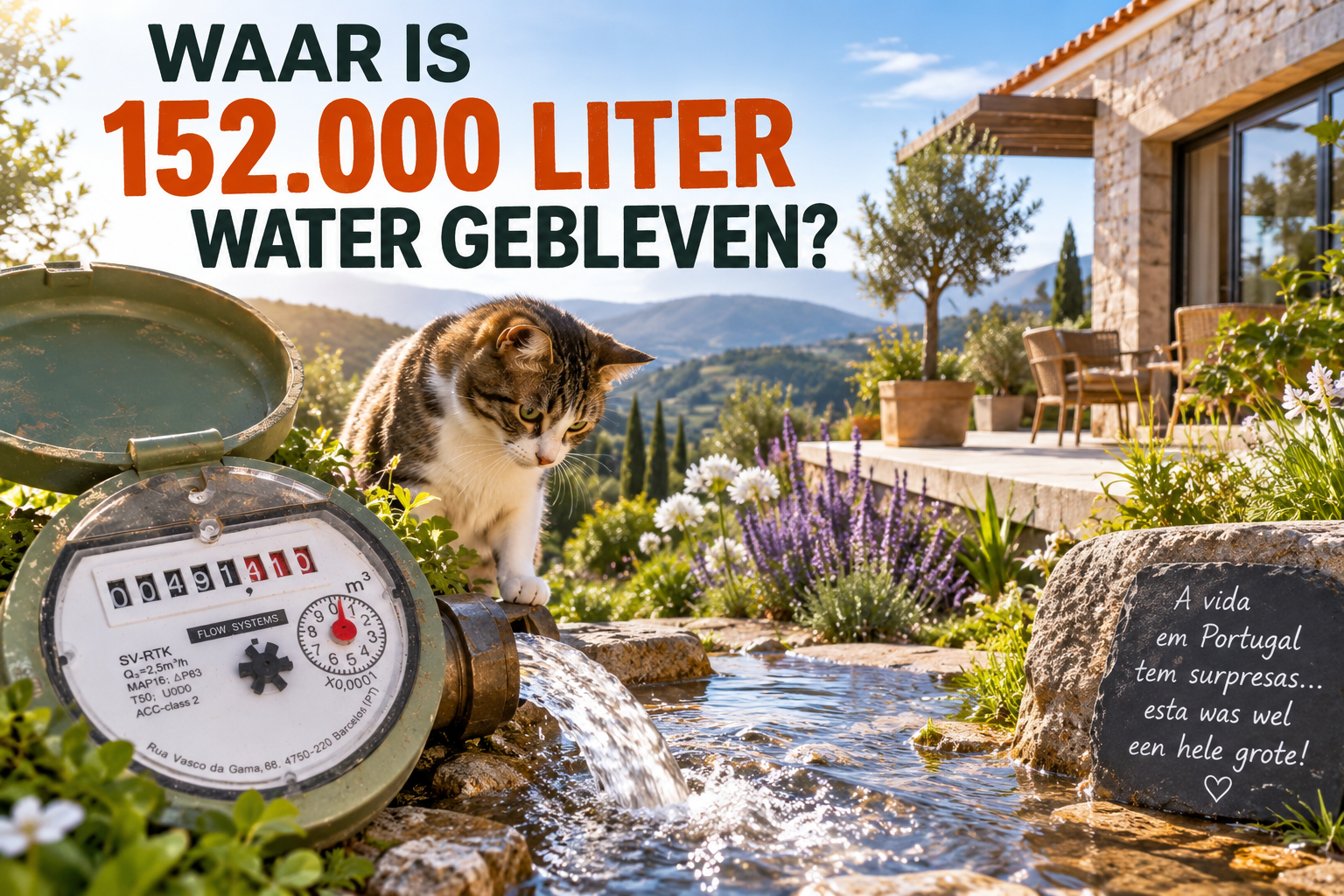
Maar 150.000 liter water?

Dat leek me zelfs voor mij wat ambitieus.

Toch was dat ongeveer het verschil toen ik onlangs naar mijn watermeter keek. Eind juli stond hij rond de 339 kubieke meter. Half september zag ik ineens 491 staan.

Ik heb een tuin in Noord-Portugal. Met planten. Veel planten inmiddels. En omdat een Portugese zomer zonder water voor de gemiddelde hortensia ongeveer hetzelfde doet als drie weken Sahara, ligt er natuurlijk een irrigatiesysteem.

Dus ja, ik verwacht meer water te gebruiken dan iemand met drie geraniums op een Amsterdams balkon.

Maar dit was wel héél enthousiast.

Het begon met zes kiwi’s

Het hele verhaal begon maanden geleden met zes kiwi’s langs de carport.

De tuinman legde leidingen, er kwamen slangen onder het worteldoek, daar gingen grote witte kiezels overheen en ik kreeg instructies over water geven.

Ik zag slangen liggen. Ik zag kraantjes. Ik zag water.

Prima.

Tot vijf van de zes kiwi’s doodgingen.

Dat vond ik op zichzelf al een prestatie, want later bleek dat er ondertussen juist enorme hoeveelheden water door de meter gingen.

We hebben lekkages gehad, leidingen zijn gerepareerd, een andere tuinman heeft gegraven en op enig moment wist eigenlijk niemand meer precies welk slangetje waarheen liep.

Inclusief ikzelf.

Sterker nog: toen iemand mij deze week vroeg of ik de kraan van de irrigatie even kon dichtzetten, realiseerde ik me dat ik niet eens wist welke kraan dat was.

Er zijn momenten waarop integreren in Portugal minder over pastéis de nata gaat en meer over met drie Portugese mannen naar een verzameling zwarte plastic slangen kijken.

Toen ben ik foto’s gaan maken

Op 24 juli stond de watermeter rond de 339 m³.

Op 19 september: 491 m³.

Dat is een verschil van ongeveer 152.000 liter.

Mijn normale verbruik is volgens mijn waterrekening ongeveer 12 m³ per maand. Zelfs met een tuin erbij hoef je geen rekenwonder te zijn om te bedenken dat hier iets niet klopt.

Dus ben ik de meter gaan fotograferen.

Niet één keer, maar steeds opnieuw. Met het tijdstip erbij.

En daar leerde ik meteen iets van.

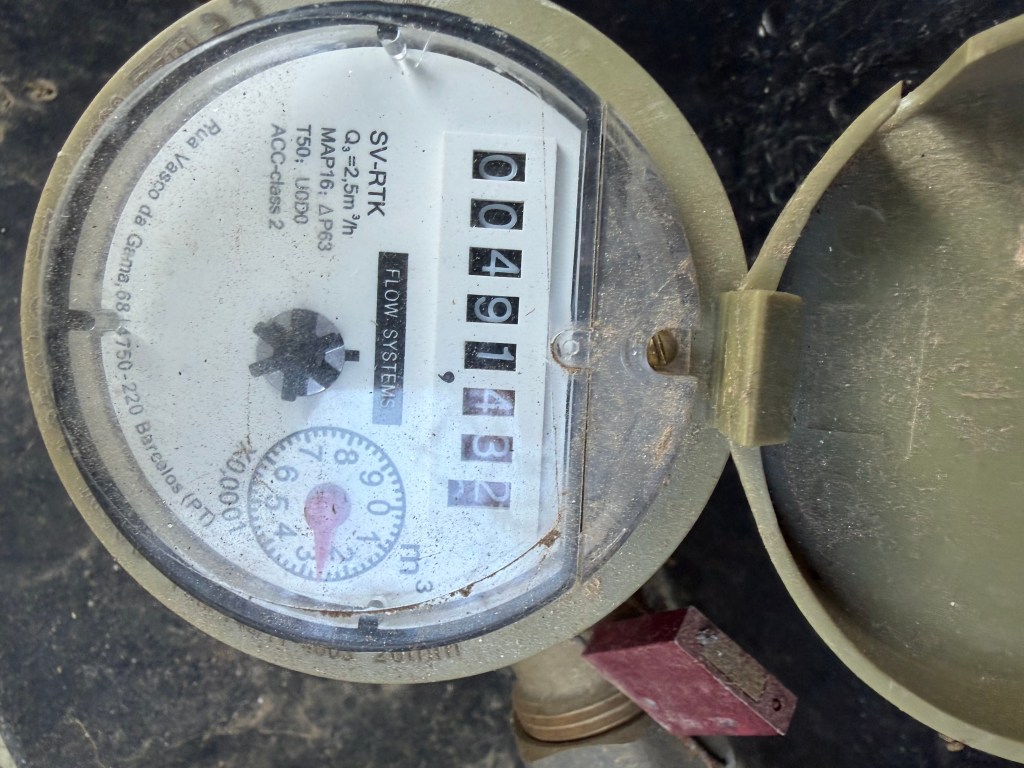
Op mijn Portugese watermeter zijn de zwarte cijfers de kubieke meters. De rode cijfers zijn de decimalen. Een verschil van 0,001 m³ is dus één liter.

Dat lijkt simpel.

Tot je met je telefoon boven zo’n meter hangt en een rood cijfer precies halverwege twee standen staat. We hebben hier zelfs een keer gedacht dat mijn watermeter achteruitliep.

Dat zou overigens een uitstekende oplossing voor mijn probleem zijn geweest.

Helaas.

122 liter in één nacht

Zaterdagmiddag om 15.26 uur stond de meter op:

491,310 m³

Zondagochtend om 08.14 uur:

491,432 m³

In 16 uur en 48 minuten was er dus 122 liter water gebruikt.

Gemiddeld 7,3 liter per uur.

Nu moet je daar niet meteen van maken dat ik een lek van precies 7,3 liter per uur heb. Ik heb in die tijd gewoon thuis gewoond. Toilet gebruikt. Handen gewassen. Water gepakt.

Maar ’s nachts doe ik zelfs in Portugal vrij weinig met 122 liter water.

Dus nu volgt de echte test: meter fotograferen, alles uit, een paar uur nergens aankomen en daarna opnieuw kijken.

Loopt hij dan nog steeds door, dan weet je dat het water ergens heen gaat waar jij het niet naartoe hebt gestuurd.

Voor of na de meter?

Daar kwam vervolgens een interessante Portugese discussie bij.

Het waterbedrijf vertelde dat zij alleen verantwoordelijk zijn voor lekkages vóór de meter.

Dat klinkt logisch.

Alleen kan een lek vóór de meter onmogelijk verklaren waarom míjn meter 152 kubieke meter verder staat. Water dat mijn meter registreert, is er immers doorheen gegaan.

De vraag is dus vooral: waar gaat het ná de meter naartoe?

In het Portugees heet je particuliere installatie de rede predial. En juist dat begrip is handig om te kennen als je ooit hetzelfde probleem krijgt.

Want verantwoordelijkheid voor het repareren van een lek en de manier waarop een uitzonderlijk hoge waterrekening wordt behandeld, zijn twee verschillende zaken.

De Portugese toezichthouder ERSAR heeft regels voor aantoonbare breuken in de particuliere installatie — rotura na rede predial. Bij een bewezen lekkage kan de facturering anders worden behandeld en kunnen ook onderdelen van de rekening die samenhangen met riool en afval worden gecorrigeerd als dat water aantoonbaar niet in het riool terechtkwam.

Je hoeft dus niet automatisch te denken: mijn leiding, mijn probleem, ik betaal alles en klaar.

Maar je moet het wel kunnen aantonen.

Daarom fotografeer ik tegenwoordig mijn watermeter alsof het mijn kleinkind is

Datum erbij. Tijd erbij. Stand goed zichtbaar.

En als de loodgieter maandag het lek vindt, wil ik ook graag op zijn factuur zien staan:

“Fuga/rotura na rede predial.”

Oftewel: lekkage/breuk in de particuliere waterinstallatie.

Foto van het lek erbij. Foto na de reparatie. Oude waterrekeningen bewaren.

Want tegen de tijd dat er een rekening op de mat valt voor een zwembad vol water dat je nooit hebt gezien, is “volgens mij lekte er ergens iets” een stuk minder overtuigend.

Twee Portugese zinnen die ik inmiddels wél uit mijn hoofd ken

Voor wie hier ook een huis heeft:

Tenho uma fuga de água depois do contador.

Ik heb een waterlek na de meter.

En bij de gemeente:

Quero pedir a correção da fatura devido a uma rotura comprovada na rede predial.

Ik wil correctie van de rekening aanvragen vanwege een aantoonbare breuk in de particuliere waterinstallatie.

Mijn gemeente, Cabeceiras de Basto, heeft daar zelfs een procedure voor het betwisten van een waterfactuur voor.

En waar zijn die 150.000 liter nu?

Dat weet ik dus nog niet.

Een deel is normaal huishoudelijk gebruik geweest. Een deel ging uiteraard naar de tuin. Mogelijk heb ik de irrigatie een tijd open laten staan zonder precies te beseffen wat er gebeurde. En we weten dat er eerder lekkages zijn geweest.

Maar ergens in dat verhaal zit nog een hoeveelheid water waar ik geen goede verklaring voor heb.

Maandag komt de loodgieter terug.

Tot die tijd kijk ik vaker naar mijn watermeter dan naar Netflix.

Wordt vervolgd.

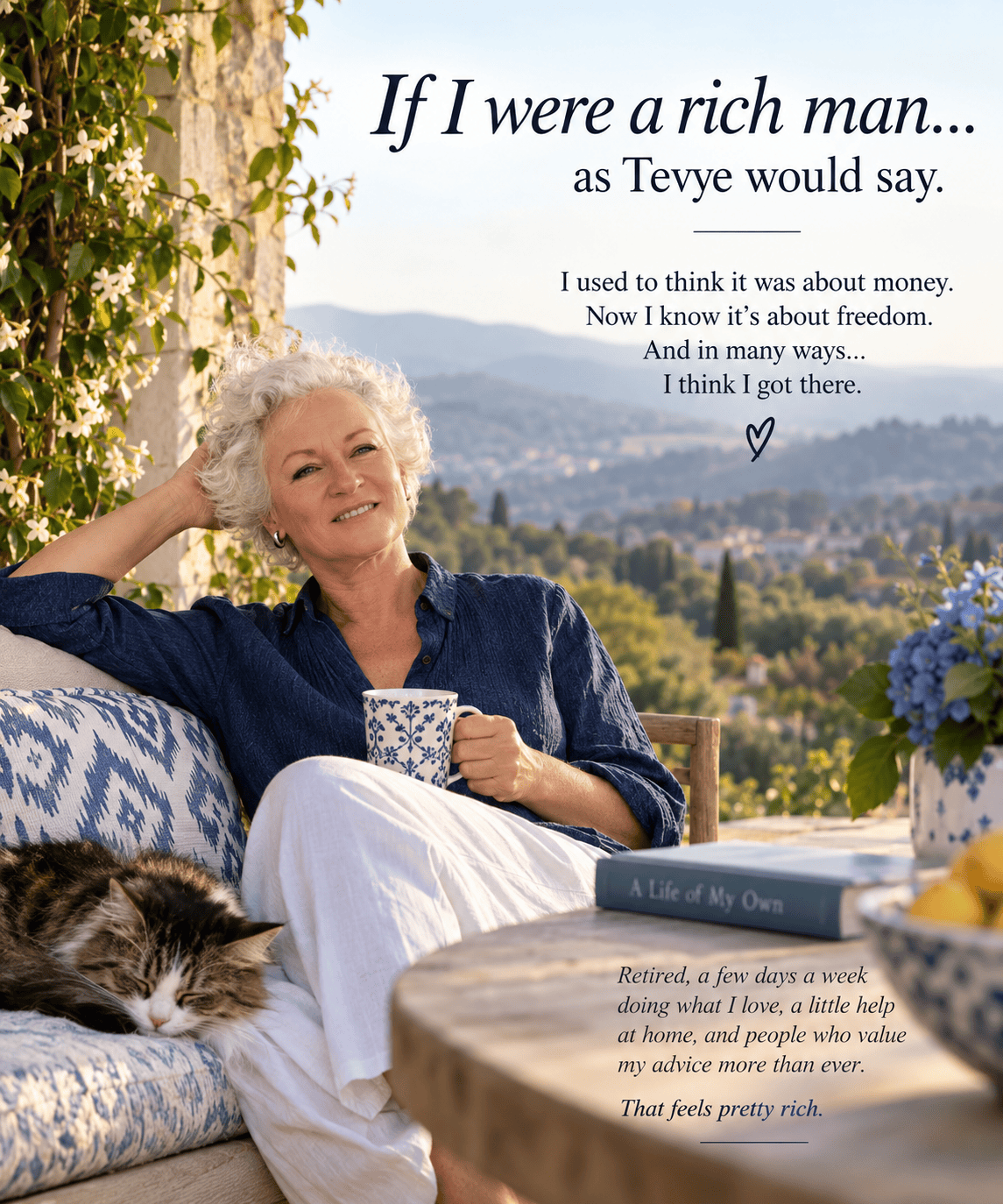
If I Were a Rich Man…

Every now and then, a song suddenly means something completely different from what it meant when you first heard it.

This morning I thought of Tevye in Fiddler on the Roof:

“If I were a rich man…”

As a child, or even as a younger adult, you hear that and think it is about money.

A bigger house.
More comfort.
People helping you.
Not having to work quite so hard.

But Tevye’s dream was actually much more interesting than that.

He dreamed of having time.

Time to think.
Time to read.
Time to talk about the things that interested him.
Time to live instead of spending every waking hour simply keeping life going.

And then I suddenly realised something rather funny.

I am more or less there.

I am retired now.

I still work, but only a few half-days a week. And I work because I still enjoy what I do, not because every hour of my week has to be sold.

I have almost enough help around the house to stop the house itself from becoming a full-time occupation.

And perhaps the nicest surprise of all is that people seem to value my professional advice more now than they did when I was working much harder.

Maybe experience has something to do with that.

After decades of working with people, studying, making mistakes, changing my mind, learning more and watching what actually works, you become less interested in proving how much you know.

You become much more interested in seeing what matters.

And perhaps people notice that.

There is something rather luxurious about being able to sit with a problem, think about it properly and say what you really think — without having twelve more things waiting behind it.

So no, I am not Tevye’s millionaire.

But if being rich means having enough, having time, being able to choose how much you work, having help with the things you no longer want to spend your days doing, and still being useful to other people…

then perhaps I should stop singing:

“If I were a rich man…”

and start admitting:

“Actually, Tevye… I think I got there.” 😉

Duizend manieren om hetzelfde stuk vis te bereiden

Ik zeg het niet graag hardop op verjaardagsfeestjes, maar hier komt het dan toch:

Ik vind de Portugese keuken helemaal niks.

Daar, het is eruit.

En het is niet dat ik het niet geprobeerd heb. Ik heb bacalhau gegeten in Lissabon, in Porto, bij iemands schoonmoeder in de Alentejo, altijd met de belofte:

“Maar deze is anders bereid dan de vorige.”

Dat klopt ook, technisch gezien.

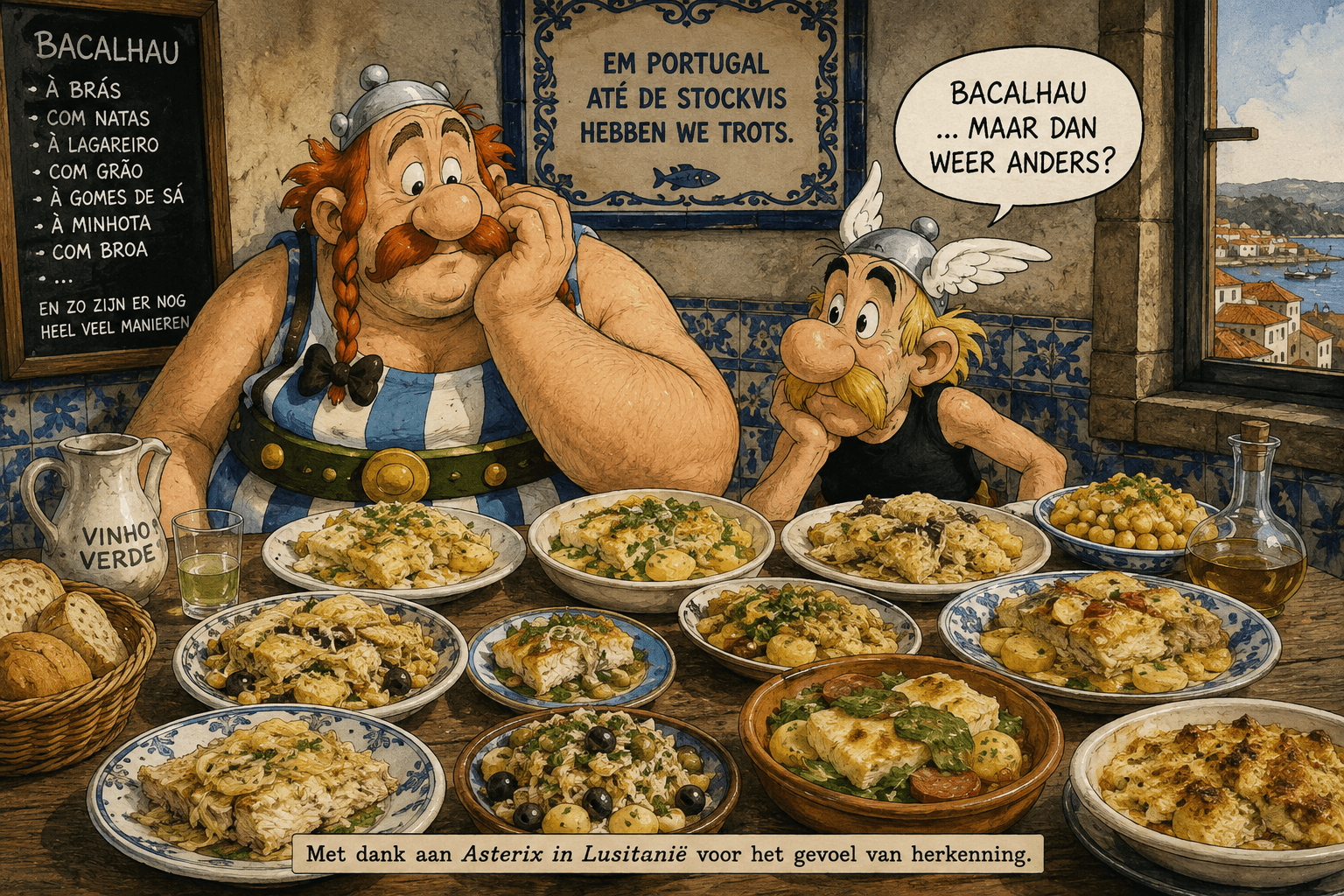
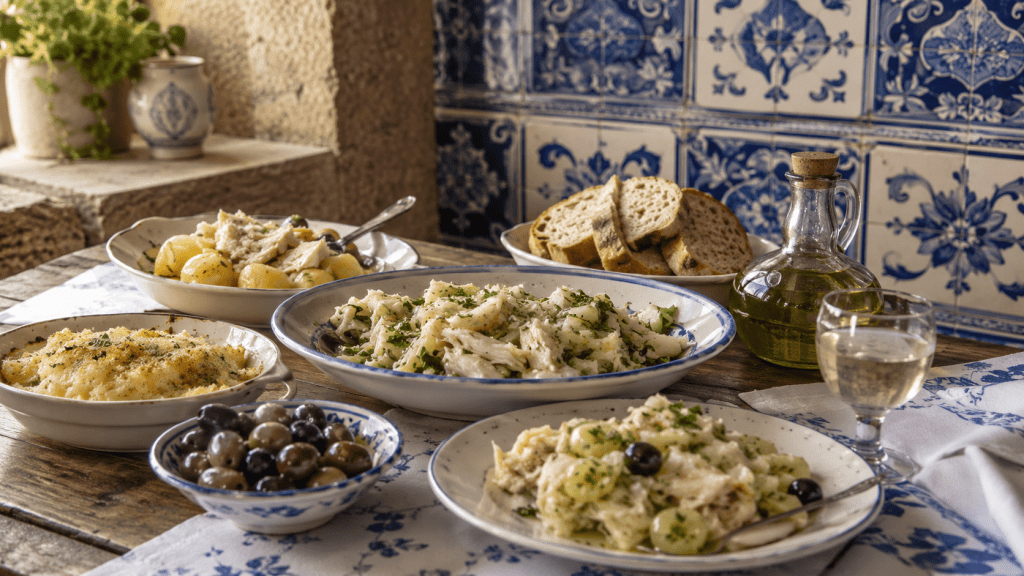
Er zijn naar verluidt zo’n duizend manieren om stokvis klaar te maken in Portugal. Ik heb er inmiddels een stuk of twintig gehad en ik kan u verzekeren:

het blijft, in de kern, gezouten vis.


Die Portugese trots begrijp ik dus niet

Wat mij vooral fascineert is niet de smaak, maar de trots.

Hoe kan een land zó overtuigd zijn van de eigen keuken, terwijl je een paar honderd kilometer verderop in Frankrijk zit, waar mensen letterlijk oorlog voeren over de juiste hoeveelheid boter in een saus?

Waar techniek, precisie en eeuwen aan gecodificeerde kookkunst tot een soort nationale religie zijn verheven?

Vergelijk dat met een Portugees bord: gegrilde vis, aardappel, een scheutje olijfolie, klaar.

Geen saus. Geen finesse. Geen mise-en-place die drie dagen duurt.

En toch — de trots is minstens zo groot.

Misschien wel groter.


Toen kwam Asterix me te hulp

Ik moest onlangs erg lachen toen ik in een recent Asterix-album, Asterix in Lusitanië, precies mijn eigen frustratie terugzag.

Obelix, altijd de man die de dingen zegt die iedereen denkt, merkt daar fijntjes op dat de Lusitaniërs — lees: de Portugezen — een probleem lijken te hebben met hun keuken:

overal wordt hetzelfde aangeboden.

Stokvis met groene wijn, in net iets andere vorm verpakt als “verscheidenheid”.

Het is een observatie die me deed grinniken, omdat het precies verwoordt wat ik al jaren denk zonder het hardop te durven zeggen:

honderd variaties op één basisproduct zijn nog geen honderd verschillende gerechten.


Maar toen begon mijn ergernis te schuiven

Want toen ik er wat dieper in dook, snapte ik ineens beter waar die trots vandaan komt.

Het is namelijk geen culinaire ambitie die aan de basis lag van die duizend bacalhau-recepten.

Het is pure armoede.

Gezouten kabeljauw was eeuwenlang een goedkope vorm van eiwit die je kon bewaren zonder ijskast. Perfect voor vissers en gezinnen die weinig geld hadden.

Je at het niet omdat er twintig soorten verse vis in de koelkast lagen.

Je at het omdat het er was.

En omdat het niet bedierf.

Diezelfde logica zit achter caldo verde: veel kool, weinig chouriço, omdat vlees duur was.

En achter açorda en migas: gerechten die letterlijk zijn ontstaan omdat je oud brood niet zomaar weggooide.

Zelfs die groene wijn van Obelix komt niet alleen voort uit een keuze voor frisheid, maar ook uit een regenachtig noorden waar de druiven niet altijd volledig rijp werden.


Alleen: Portugal was helemaal niet altijd arm

En dan wordt het verhaal interessanter.

Want zeggen “Portugal was arm en Frankrijk was rijk” is veel te simpel.

Portugal was op zijn hoogtepunt, in de vijftiende en zestiende eeuw, juist schathemeltjerijk.

Lissabon behoorde dankzij handel, goud, specerijen en later rijkdom uit Brazilië tot de welvarendste steden van Europa.

Alleen kwam die rijkdom nauwelijks terecht bij de vissers en boeren die de dagelijkse Portugese keuken vormgaven.

En — dat vind ik het fascinerende gedeelte — die rijkdom werd ook aan de top anders besteed dan in Frankrijk.


Frankrijk kocht saus. Portugal kocht kerken.

Terwijl aan het Franse hof van Lodewijk XIV eten bijna een middel werd waarmee edelen elkaar de loef probeerden af te steken, stopte het Portugese hof enorme rijkdom in kerken en kloosters.

Het gigantische klooster-paleis van Mafra, gebouwd met Braziliaanse rijkdom, zegt eigenlijk alles.

Status kocht je daar met steen en religie.

Niet met een bord.

Dat betekent overigens niet dat Portugal geen verfijnde kookkunst kende.

Die zat alleen opvallend vaak achter kloostermuren.

De beroemde Portugese doces conventuais zijn daar een prachtig voorbeeld van.

Denk aan de eierdooiers, suiker en amandelen waar Portugese kloosters een bijna absurd repertoire aan zoetigheden van maakten.

Daar zat de verfijning dus wél.

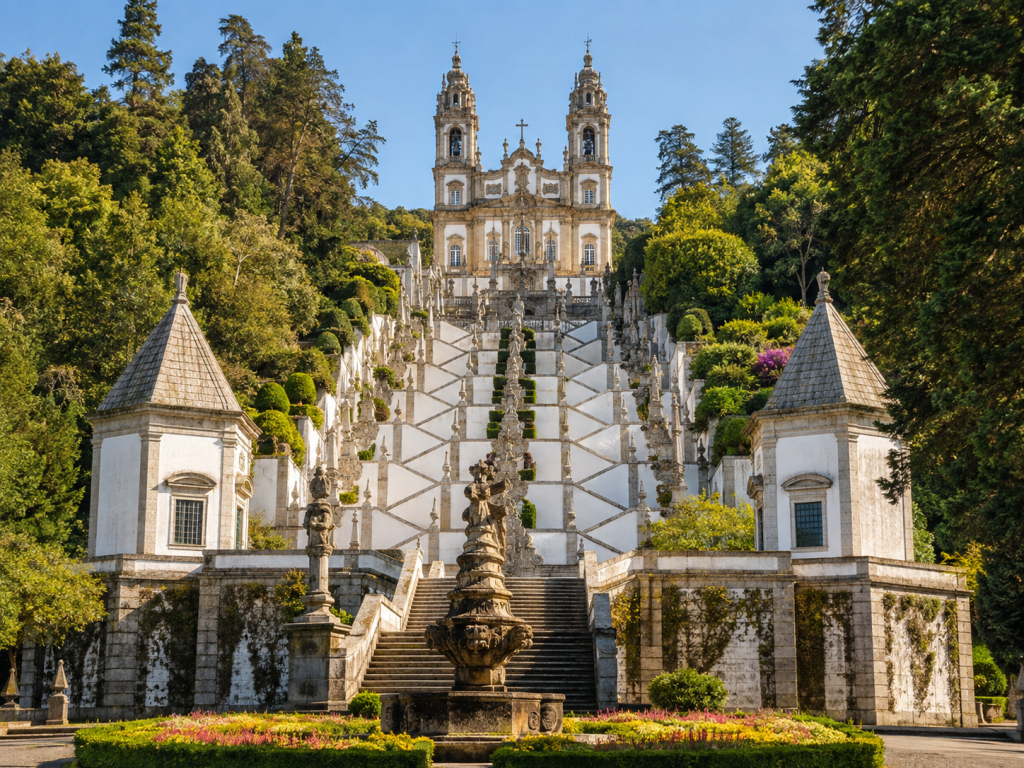
Lamego, the Sanctuary of Nossa Senhora dos Remédios

Waarom Frankrijk vervolgens de culinaire wereld veroverde

En daar ontstaat volgens mij een belangrijk verschil.

Na de Franse Revolutie raakten veel chef-koks van adellijke families hun werkgevers kwijt.

Ze begonnen restaurants.

De keuken van het hof kwam letterlijk op straat terecht.

De technieken, sauzen en regels die ooit waren voorbehouden aan de elite werden zichtbaar, overdraagbaar en uiteindelijk exporteerbaar.

Zo kon de Franse haute cuisine uitgroeien tot een internationale standaard voor wat wij lange tijd als “verfijnd koken” zijn gaan beschouwen.

Portugal kende nooit precies zo’n breuk.

De verfijning die er bestond, bleef veel meer gescheiden van de eenvoudige keuken van het dagelijks leven.


Twee keukens die uit een totaal andere wereld komen

En daar zit denk ik de kern van waarom ik de Portugese keuken nooit helemaal zal waarderen op de manier waarop Fransen hun keuken laten waarderen.

De Franse haute cuisine is geboren uit overvloed die uiteindelijk de straat bereikte.

Met tijd, geld en verfijning als uitgangspunt.

De Portugese keuken van gewone mensen is veel sterker gevormd door schaarste.

Aan de waterkant.

Op het land.

Met bewaren, voeden en overleven als uitgangspunt.

Terwijl de rijkdom die er óók was ergens anders naartoe ging.

Dat zijn dus niet twee gradaties van dezelfde culinaire traditie.

Het zijn twee totaal verschillende filosofieën die toevallig allebei “keuken” heten.


En toen begreep ik die bacalhau ineens iets beter

Dus nee.

Ik ga waarschijnlijk nooit enthousiast worden van nóg een bord bacalhau.

En wanneer iemand mij vertelt dat ik deze echt moet proberen omdat hij totaal anders wordt klaargemaakt, zal ik waarschijnlijk nog steeds denken:

Ja hoor. Daar gaan we weer.

Maar ik begrijp inmiddels wel beter waarom een Portugees, wanneer ik zeg dat het allemaal een beetje hetzelfde smaakt, dat niet alleen ervaart als een culinaire opmerking.

Je raakt ook aan iets veel persoonlijkers.

Aan een geschiedenis waarin met weinig voedsel iets moest worden gemaakt wat voedde, houdbaar was en mensen bij elkaar bracht.

Een geschiedenis van schaarste die uiteindelijk werd omgezet in traditie.

En traditie werd identiteit.

En identiteit werd trots.

Dat verdient op zijn minst wat meer respect dan ik er tot nu toe voor had.

Ook al blijft het, wat mij betreft, gewoon gezouten vis.

Cuida do Teu Coração ao Entardecer

Um coração partido também mexe com o cérebro

Sabes racionalmente que acabou.

Talvez até saibas que aquela relação já não te fazia bem.

E, mesmo assim, continuas a pensar naquela pessoa. Pegas no telemóvel sem razão. Dormes pior. Ficas mais ansioso/a. Ou aparece uma vontade enorme de chocolate, vinho ou qualquer coisa que dê um alívio rápido.

Depois alguém diz:

“Tens de deixar ir.”

Se fosse assim tão simples, ninguém sofria durante semanas ou meses depois de uma separação.

Porque o desgosto amoroso não acontece apenas na tua cabeça.

O corpo e o sistema nervoso também reagem.

o cérebro perde uma fonte de segurança

Quando temos uma ligação forte com alguém, o cérebro associa essa pessoa a segurança, recompensa e familiaridade.

A voz.

As mensagens.

Um abraço.

As rotinas.

A sensação de saber que aquela pessoa está lá.

O sistema opioide natural do cérebro — onde entram também as endorfinas — participa na ligação social, na sensação de conforto e na regulação da dor.

Quando uma relação termina de repente, essa fonte de segurança desaparece.

Mas o cérebro ainda a procura.

É por isso que uma separação pode, por vezes, parecer quase uma espécie de abstinência.

A parte racional sabe que acabou.

A biologia ainda não percebeu isso completamente.

porque é que algumas pessoas sofrem mais do que outras?

Nem todos reagimos da mesma forma à rejeição ou à perda.

A nossa resposta ao stress é influenciada pela história de vida, pelas experiências anteriores e até por mecanismos epigenéticos.

A epigenética estuda, entre outras coisas, a forma como determinadas experiências podem influenciar a expressão dos nossos genes.

Um dos sistemas interessantes neste contexto envolve o gene POMC, que participa na produção de substâncias como a beta-endorfina.

Isto não significa que exista um “gene do abandono”.

Mas mostra uma coisa importante:

as experiências anteriores podem influenciar a forma como o sistema nervoso reage mais tarde à proximidade, ao stress e à perda.

Por isso, para algumas pessoas, uma rejeição não é apenas triste.

É profundamente desorganizadora.

anandamida: aprender que já não há perigo

Outro sistema fascinante é o sistema endocanabinoide.

Uma das suas moléculas é a anandamida.

A anandamida participa na regulação do stress e num processo chamado fear extinction — a diminuição progressiva de uma resposta de medo aprendida.

Imagina:

Recebias uma mensagem todas as manhãs.

A relação termina.

No dia seguinte acordas e procuras automaticamente o telemóvel.

E sentes logo aquele aperto.

O mesmo pode acontecer com uma música, um restaurante, um cheiro ou uma fotografia.

A memória não precisa de desaparecer.

O cérebro precisa de aprender uma coisa nova:

“Eu lembro-me disto, mas neste momento estou em segurança.”

Esse processo leva tempo.

Mas pode ser apoiado.

alimentação e fitoterapia podem ajudar?

Não acredito que se possa tratar um coração partido apenas com suplementos.

Mas acredito que podemos criar melhores condições biológicas para o cérebro recuperar.

Uma substância interessante é o kaempferol, um flavonoide presente, por exemplo, nos brócolos, na couve e nas alcaparras.

Em investigação laboratorial, o kaempferol consegue inibir a enzima FAAH, que degrada a anandamida.

Isto torna-o interessante do ponto de vista neurobiológico.

Mas convém manter os pés no chão:

não significa que tomar kaempferol faça desaparecer o sofrimento emocional.

É uma peça de um puzzle muito maior.

Também a apigenina, presente por exemplo na salsa, no aipo e na camomila, está a ser estudada pelos seus efeitos sobre sistemas relacionados com o GABA, stress e neuroplasticidade.

Mais uma vez: apoio, não milagre.

e uma coisa muito simples: vai para a natureza

Uma das melhores coisas que podes fazer quando o cérebro está sobrecarregado é extremamente simples.

Sai de casa.

Caminha.

De preferência num ambiente verde.

Estudos sobre exposição à natureza e forest bathing mostram efeitos positivos no stress, ansiedade e cortisol.

E há ainda outro benefício:

quando estás a caminhar, não estás sentado/a a verificar pela décima vez se a outra pessoa está online.

Às vezes, isso já é uma intervenção importante.

cuidado com os atalhos

Quando sentimos vazio, o cérebro procura recompensa rápida.

Então aparecem:

  • açúcar
  • chocolate
  • álcool
  • comida altamente processada
  • redes sociais
  • aplicações de encontros
  • mensagens que sabemos que não devíamos enviar

Durante alguns minutos, sentimos alívio.

Mas se todas as emoções difíceis forem seguidas por uma recompensa rápida, o cérebro aprende:

“Não consigo suportar este sentimento sem fugir dele.”

E é precisamente o contrário que queremos ensinar.

Quero que o sistema nervoso aprenda:

“Consigo sentir isto e continuo em segurança.”

o que faria primeiro?

Eu começaria pelo básico.

Boa alimentação.

Proteína suficiente.

Refeições regulares.

Sono.

Movimento.

Luz natural.

Natureza.

Menos álcool e menos açúcar como anestesia emocional.

E algum tempo longe das coisas que reativam constantemente a ferida.

Parece simples.

Mas biologicamente faz muita diferença.

o que tem isto a ver com o Nederland Slank?

Muito.

No Nederland Slank não olhamos apenas para o peso.

Eu quero perceber porque é que o corpo faz aquilo que faz.

Stress, sono, hormonas, insulina, alimentação e sistema nervoso estão ligados.

Por isso, não começamos simplesmente com:

“Come menos.”

Olhamos para o metabolismo, análises sanguíneas, alimentação e, quando faz sentido, também para os mecanismos neurobiológicos que influenciam o comportamento alimentar.

Porque às vezes o problema não é falta de força de vontade.

É um organismo que ainda está em modo de sobrevivência.

Queres perceber melhor o que o teu corpo precisa para voltar ao equilíbrio? Marca uma consulta no Nederland Slank e analisamos o que está por trás dos teus sintomas, do teu metabolismo e do teu comportamento alimentar.